
Methylcobalamin Vs Cyanocobalamin Vs Adenosyl/Hydroxo: Which B12 Form Is Best?
By Supplement Reports Team

July 14, 2025
9 min read
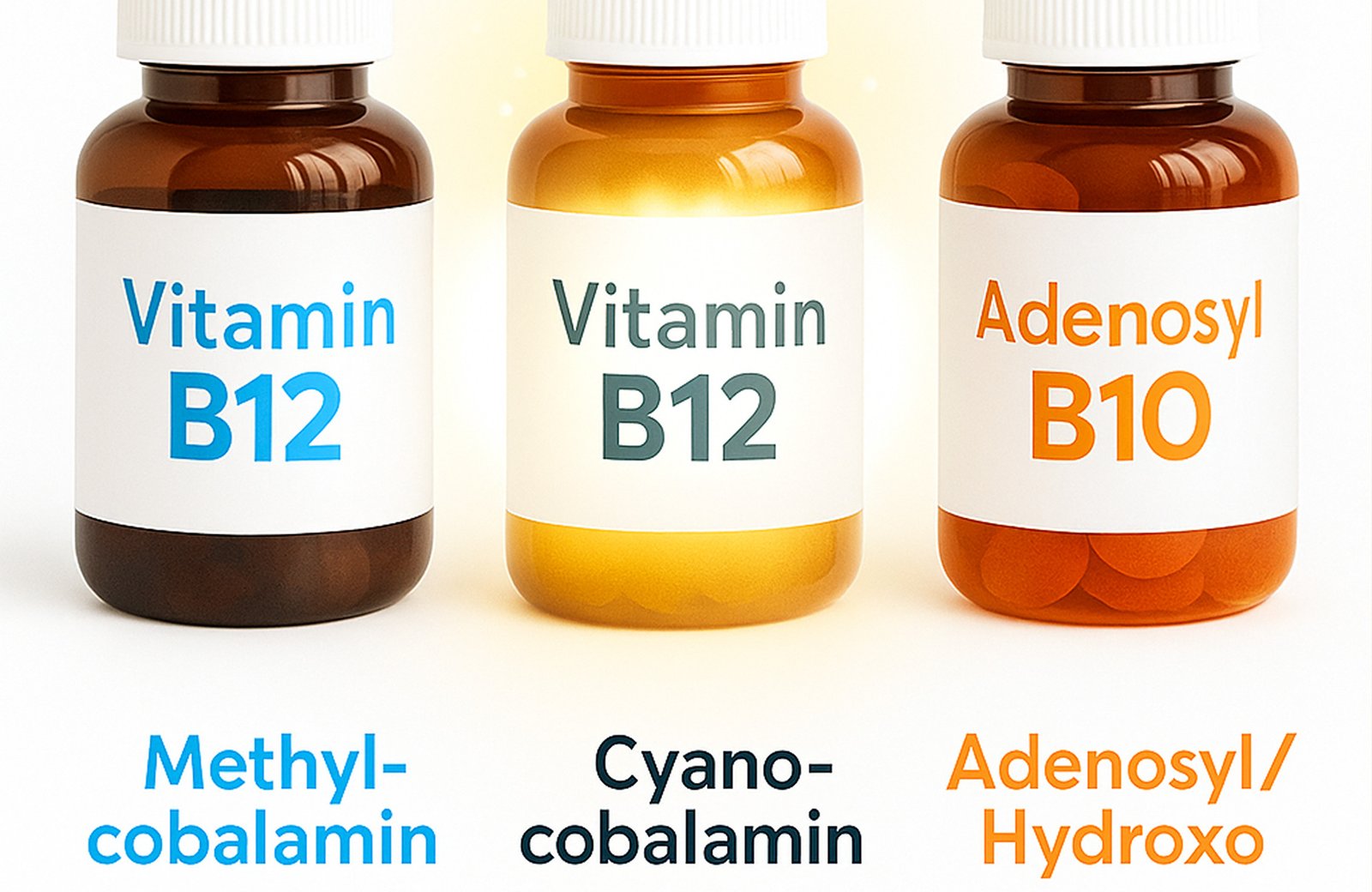
All four forms of vitamin B12 can effectively correct low levels when dosed appropriately. For most people, methylcobalamin is the best all-around choice for daily use due to its active form, wide availability, and excellent user tolerance. Cyanocobalamin is a highly stable and budget-friendly option, though it requires conversion in the body. Adenosylcobalamin is the mitochondrial form of B12 and is often stacked with methylcobalamin for more comprehensive support. Hydroxocobalamin is a long-circulating form that is common in clinical injections but less available in over-the-counter supplements. Ultimately, the best B12 supplement for you will also depend on the dose, delivery format, excipients, and whether the product has been third-party tested for quality and purity.
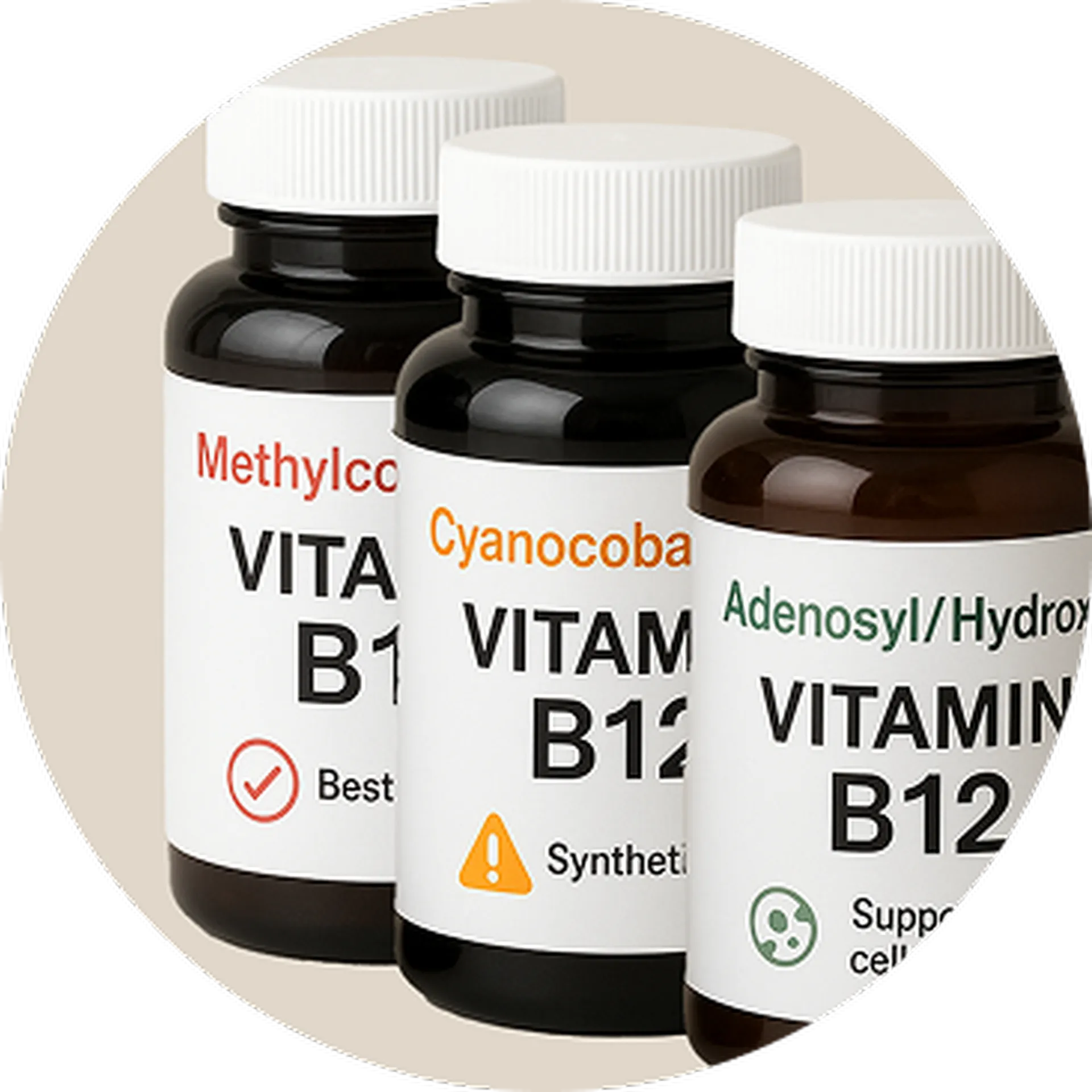
Why B12 Form Matters
B12 Basics: Active Coenzyme Forms in the Body
To understand why B12 form matters, it helps to know how it works in your body. Only two forms of vitamin B12 are active coenzymes in human metabolism: methylcobalamin and adenosylcobalamin. Methylcobalamin works in the cytosol of your cells, where it plays a critical role in methylation processes, such as converting homocysteine to methionine. Adenosylcobalamin is found in the mitochondria, the energy powerhouses of your cells, where it is essential for metabolizing odd-chain fatty acids and amino acids. All other forms of B12, including cyanocobalamin and hydroxocobalamin, must be converted into one of these two active coenzyme forms before your body can use them. While the term “bioavailability” is often used to compare B12 forms, it’s important to remember that the dose and delivery method can sometimes have a greater impact on absorption than the form itself. A higher dose of a less bioavailable form can still be effective, as the body can absorb B12 through passive diffusion when taken in large enough quantities.
Deep Dive by Form
Methylcobalamin (Methyl B12)
What it is: Methylcobalamin is the methyl-donor coenzyme form of B12, meaning it is already in its active state and can be directly used by the body for methylation reactions.
Pros: As an active form, it is a popular choice for sublingual supplements and has a strong track record of positive real-world outcomes for maintaining healthy B12 levels. It is also widely available in a variety of products.
Considerations: Methylcobalamin is less stable than cyanocobalamin and can be sensitive to light and heat, so quality packaging is important. A small number of users report feeling “too stimulated” after taking it; in these cases, adjusting the dose or taking it earlier in the day can help.
Best for: Most consumers looking for a reliable and effective daily B12 supplement.
Cyanocobalamin
What it is: Cyanocobalamin is a synthetic form of B12 that is very stable and must be converted to one of the active coenzyme forms in the body.
Pros: It has excellent shelf stability, is the most affordable form of B12, and is widely used in fortified foods and supplements.
Considerations: The conversion process requires an extra step in the body, and some consumers prefer to take active forms of B12. However, it is still an effective option when taken at an adequate dose.
Best for: Budget-conscious shoppers and for general B12 maintenance.
Adenosylcobalamin (Dibencozide)
What it is: Adenosylcobalamin is the mitochondrial coenzyme form of B12.
Pros: It complements methylcobalamin and is often included in dual-form blends to provide “complete coverage” of B12’s metabolic functions.
Considerations: There are fewer stand-alone adenosylcobalamin supplements available, and it is typically more expensive than other forms.
Best for: Stacking with methylcobalamin for comprehensive B12 support.
Hydroxocobalamin
What it is: Hydroxocobalamin is a naturally occurring form of B12 that converts efficiently to the active coenzyme forms and has a longer circulation time in the body.
Pros: It is commonly used in clinical settings for B12 injections and can help maintain steady serum levels of the vitamin.
Considerations: There are fewer over-the-counter oral supplements available, and they can be more expensive. While effective, there is less data on oral hydroxocobalamin compared to methylcobalamin and cyanocobalamin.
Best for: Medically supervised situations, such as injections, and for consumers who prefer a non-methyl form of B12.
Stability, Packaging & Shelf Life
Absorption & Delivery Formats
Conversion & Bioavailability—What It Means for You
Tolerance, Sensitivities & Special Situations
How to Read the Label (and Not Get Fooled)

Dosing Guide (Non-Medical)
Decision Helper
♥ Want the simplest, reliable daily option?→ Methylcobalamin
♥ Budget first and okay with conversion? → Cyanocobalamin.
♥ Want “complete coverage”? → Methyl + Adenosyl blend.
♥ Prefer non-methyl and longer circulation (and/or under medical care)? → Hydroxocobalamin (often by injection).
FAQs
Is sublingual B12 better? → Evidence is mixed; pick the format you’ll take consistently.
Can I combine forms? Yes—methyl + adenosyl is common; many tolerate it well.
Can B12 keep me awake? Rarely for some; try earlier dosing or lower potency.
Conclusion
Compliance & Safety Note
Top Rated Vitamin B12 Supplement
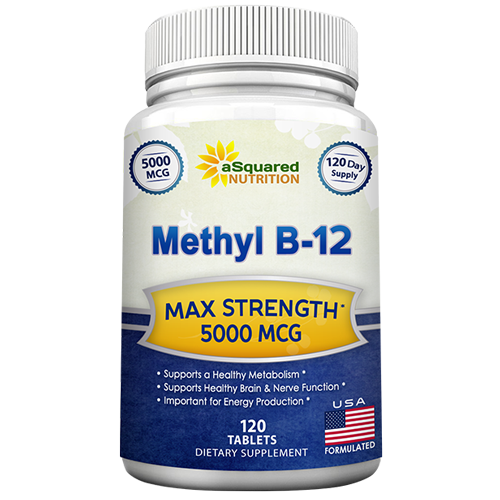
aSquared Nutrition
Vitamin B-12 5000mcg (Methylcobalamin)
9.9

(2,831 reviews)
- Boosts brain function, maintain healthy brain cells & reduces overall fatigue
- Improves digestive health; relieves upset stomach and constipation
- Helps convert fats, carbs & proteins into energy efficiently
- Highly bioavailable form of B-12, ultra strength: 5000 MCG of Methylcobalamin
- Natural ingredients, non-GMO, third-party tested, made in GMP facility
Show more
- Boosts brain function, maintain healthy brain cells & reduces overall fatigue
- Improves digestive health; relieves upset stomach and constipation
- Helps convert fats, carbs & proteins into energy efficiently
- Highly bioavailable form of B-12, ultra strength: 5000 MCG of Methylcobalamin
- Natural ingredients, non-GMO, third-party tested, made in GMP facility
Picked by ... people today
